

Home › Projects › St. Cloud, Florida
Police · Staffing
St. Cloud Police Staffing Study
CPS prepared a workload-based staffing analysis for the St. Cloud Police Department covering five divisions, projecting personnel needs from 2024 through 2050 against population forecasts that carry 69,211 residents in 2024 to between 142,791 and 216,350 by 2050.
The engagement
What We Did
St. Cloud is among the faster growing municipalities in Central Florida, with recorded population rising from 21,988 in 2000 to 69,211 in 2024 and regional forecasting models anticipating continued expansion both inside the city limits and across the surrounding Joint Planning Area, which the department also serves. The city engaged The Center for Public Safety to prepare a comprehensive staffing analysis of its police department, examining current and future personnel requirements across five divisions: Administration, Patrol, Special Operations, Support Services, and Investigative Services.
Rather than relying on per capita ratios, we reconstructed service demand from department records, reviewing five years of incident and emergency call history, arrest and citation activity, response and service time intervals, and the organizational structure of each division. Patrol requirements were computed from annual call volume, an average incident handling time, an allowance for report writing, training, relief, and preventive patrol, and an availability factor derived from actual duty hours, together with an efficiency adjustment reflecting the effect of technology on officer productivity. Investigative staffing was modeled from available case hours per detective and average time worked per case, while school-related assignments were scaled to projected student enrollment. Population, call volume, and enrollment forecasts were carried forward in low, medium, and high scenarios through 2050.
The resulting plan sets position-level targets at 2030, 2035, 2040, 2045, and 2050 for every division, with total departmental staffing projected to grow from 200 in 2024 to 640 by 2050 under the high growth scenario. Staffing rises faster than call volume alone would suggest for two reasons the report makes explicit: the 2024 figure is the department's actual strength, which the workload analysis found already short of what current demand requires, and the service area extends beyond the city limits into the Joint Planning Area, where the forecast growth is steepest. We paired the projections with guidance on recruitment, training capacity, retention, community engagement, and technology investment, and recommended that the city reassess staffing on a regular cycle as growth and technology continue to reshape service demand.
Related work
Other Engagements
Palm Bay, Florida
Palm Bay Police Staffing Study
CPS examined patrol, investigative, and communications center workload for the Palm Bay Police Department, building a phased ten-year staffing and civilianization plan from four fiscal years of dispatch data and a planning zone growth projection, then testing the result against a multi-construct peer benchmark.
View project
Pompano Beach, Florida
Pompano Beach Police Department Transition Study
CPS examined what establishing an independent municipal police department in Pompano Beach would require, preparing a facility program, a technology needs assessment, a hiring and retention plan, and planning-level cost estimates for a department of 271 sworn and 90 civilian positions, housed in a facility programmed to a 400-person design capacity.
View project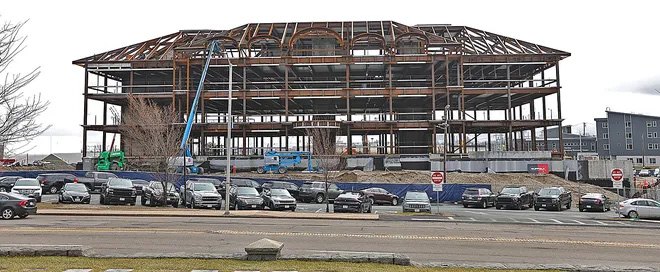
Gwinnett County, Georgia
Gwinnett County Police Headquarters Space Needs Assessment
CPS prepared the final program and spatial needs assessment for a consolidated Gwinnett County Police Department headquarters, sizing every unit against three planning horizons and producing a room-by-room program of about 178,000 gross square feet.
View projectStart the conversation
Tell Us What Your Agency Is Facing.
Most agencies call us about a budget request, a growth pressure, or the start of a facility project. A short conversation is usually enough to tell you whether a study is the right next step, and what it would involve.